“The Trouble with Tulip” by Mindy Starns Clark

Characters That Won’t Easily Let You Go

41fUqy3TCVL._SX323_BO1,204,203,200_ Josephine “Jo” Tulip is an independent, take-charge kind of young woman. Her house is organized and spotless, and she’s considered an expert of household tricks, partly because of the newspaper column she writes about everything from removing stains from clothes and carpets to getting more use out of your cleaning supplies.

About some things, however, she’s woefully clueless. Continue reading

Schedule Change

Dear Friends and Fellows,

I initially started posting my blog posts on Friday night/Saturday, because somewhere in the inter-sphere I’d heard that was the best time to post. Recently, however, I’ve read that Monday, before work, is a more-likely time for people to notice and read my content.

In the interests of being noticed, I’m planning to adjust my posting schedule to Monday mornings (or Sunday nights), for the convenience of my readers. Thus, you can expect my next installment (another book review) this next Monday.

Until then,

Kimia Wood

Surprise, Don’t Tell: Half-life vs. Halo

It’s Not What’s Said, But What’s Not Said

Heacrab_HL2_Model

Image credit: es.Valve.wiki.com

There are different ways of “telling” someone something, and there are different ways of “showing” someone something. Don’t think that just because video games are largely visual experiences – rather than text – doesn’t mean they’re not “telling” (or, violently shoving information on the audience). Continue reading

Hint, Don’t Tell: Half-life 2

How It’s Done

01440_1100638784

Photo credit: PC.gamespy.com

“Show, don’t tell.” We’ve all heard it. But applying it is something else, especially when there are different ways of showing and different ways of telling. I’d like to focus on one example of some first-rate “experience-giving” vs. “info-dumping”: Half-life 2. Continue reading

“Blott” by Daniel Parsons

Not C. S. Lewis, But He Could Have Been

Now I understand the kickback against independent publishing (sort of). Yet for all this manuscript’s unprofessionalism, the story still swept me along so that I had no choice but finish it.

The story centers around Blott, a boy whose village faces starvation due to a drought and is controlled almost exclusively by the chief member of the council. In an attempt to find relief for his people, Blott discovers things about himself and his world, and is forced to explore the strange abilities that separate him from the rest of the people, even from his parents and brother. He also struggles with a violent enjoyment of destruction that might come from some mysterious external puppet-master, or from a well of darkness in his own soul. Continue reading

As You Know, Columbo,…

Harder To Spot Than You’d Think

795px-Peter_Falk_Richard_Kiley_Colombo_1974

Image credit: Wikimedia Commons

I’m not sure of its official name in the circles of writing craft coaches, but you might recognize it as “As you know, Bob”-syndrome. Essentially, editors and readers frown on writers feeding necessary (or unnecessary) backstory and world dynamics to the audience via dialogue between characters who already know what they’re talking about. Continue reading

“Book of Poisons” by Serita Stevens and Anne Bannon

No Such Thing As Iocane Powder

 I’m a quiet kind of person, but I have a peculiar hobby. That’s why I got the Book of Poisons. No, no, I write novels. Honest.

Especially useful for mystery writers, Book of Poisons details hundreds of toxins for causing havoc and death (to fictional characters, of course). Continue reading

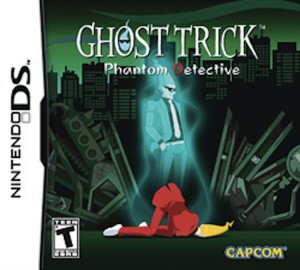
“Ghost Trick”

Make Unforgettable Friends

Ghost_Trick_Phantom_Detective_cover_art

Identity crisis. Powers of the dead. Time-warping, mind-hopping fun.

Ghost Trick is a puzzle game developed by CapCom, and available for the Nintendo DS and iOS. With a smooth, touch-screen-oriented interface, challenging yet rewarding puzzles, and an enthralling storyline, it offers hours of rewarding entertainment. Continue reading

“The Emotion Thesaurus” by Angela Ackerman and Becca Puglisi

Emotion_Thesaurus-Cover One of the most useful writing aides I have found along my journey has been The Emotion Thesaurus. In the constant quest to show readers our characters’ actions and let them deduce the underlying emotions and thoughts for themselves, The Emotion Thesaurus provides engrossing lists of physical tics, physiological sensations, and other characteristics that can be used to display a character’s internal state without reusing the same ones again and again. Continue reading