Preschool: Over-promise, Under-deliver

Preschool: Over-promise, Under-deliver

NOTE: This post is something of a departure from my usual tone, as it will be more dry and academic than I usually write. This is because it’s a subject I have strong emotions about, and in an attempt to avoid breathing fire on my keyboard, I’ve squeezed a lot of my normal humor out of it.

But it’s still an important piece about a vital subject, so please take the time to read it and form your own opinions. I promise I only froth at the mouth a tiny bit.

What if we’ve been wrong about preschool this whole time?Preschool: Over-promise, Under-deliver — Kimia Wood
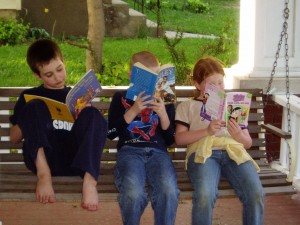
Lots of people see “preschool” and they think “good.” We all want our kids to learn, right? We want them to have the best chance to succeed, right? And wouldn’t starting them in an institutional learning system as early as possible be the best way to do this?

No.

There’s also the question of whether this is the best way to honor God with our children. We want them to “achieve their full potential” and get good jobs, etc., but if we don’t make honoring God our chief focus (and make sure our kids know as much as we can teach them about Jesus) then we’re not living our Christian witness to the best of our ability.

But I’ll save that for a different post. For now, I’ll focus on the benefits preschool promises: academics, adult interaction, and affirmative action.

Let’s dive into this topic and try to figure out what we’re hoping to get out of preschool and whether it really delivers (or not)!

Academic Achievement

We all want Little Johnny to learn “reading, writing, and ‘rithmetic”. After all, “whatever you do, do it as though you were working to the Lord.” We want our kids to be able to support themselves, contribute to their communities, and enrich the lives of others…to say nothing of living full lives themselves and using the intellectual gifts God has given them.

It all starts with a “good education,” right?

And preschool is one of the best ways to give kids that, right?

No.

Where child development is concerned, there are very few absolutes…but the evidence is coming in stronger and stronger that preschool – especially an academically-focused preschool – does not give kids an “edge” to learning…and in fact might hurt them.

Academics over Learning

There’s been a lot of emphasis lately on pushing kids to achieve higher standards at earlier ages. The Atlantic tells us how kids who used to be expected to read by the end of first grade are now expected to read by the end of preschool. Maybe I’m doing the math wrong, but isn’t that a two-year advance?

Preschool: Over-promise, Under-deliver — Kimia Wood

How can we help our children thrive? Image from Pixabay

A recent article in the newsletter from the Home School Legal Defense Association cites several researchers and testimonies from parents that children grow and develop at different ages. For instance, “children who had learned to read in kindergarten had no substantial advantage over those who learned to read in the 1st grade.”

Kids have different development rates, and that’s okay. Trying to force them into a one-size-fits-all system is a terrible way to let them flourish.

Parents testify to children as old as seven and eight years old who would not have done well in a traditional, sit-down-shut-up learning environment. Forcing these children to attend a rigorous preschool at four or five years old would not have helped them with “school preparedness”…it would have destroyed them. They needed a kinetic, hands-on learning environment tailored to their particular interests (an environment that their parents did provide for them).

The article also references increased diagnoses of Attention Deficit Hyper-activity Disorder (ADHD), or similar disorders on the spectrum, when kids who aren’t developmentally ready for school are expected to conform to the school environment. Do these kids really have a learning disability? Or are they just being asked to perform above where their brain and body have developed to?

Long-term consequences?

There’s more. According to Psychology Today, an intense focus on academic attainment (learning reading, writing, and math through worksheets and instruction) in preschool almost doubles a child’s chance of a felony record. (Presumably because the early pressure and behavioral expectations led to them acting out more in school, and elsewhere…although it’s impossible to finger causality in cases like this.)

Contrast this with “play-based” preschools where children are encouraged to play, interact with others, and explore on their own…sort of like what they would do in a natural home setting, perhaps in conjunction with play-dates.

EdLibertyWatch.org collects quotes from several different papers, including this study from the National Bureau of Economic Research: “…researchers concluded that preschool has a positive impact on reading and mathematics scores in the short term and a negative effect on behavior.”

Further, the National Conference of State Legislatures (NCSL) reports that a 2015 study found that “while children coming from ECE [early childhood education] programs earned higher achievement scores in kindergarten, these students did not test higher than their non-ECE attending peers by first grade, and tested below their peers by the third grade.”

Which is more important?

A slight, temporary rise in test scores in exchange for increased behavior issues, and even more ADHD diagnoses? Wait – should this even be a trade-off at all?

The homeschooling examples prove we can suit our education models to each child’s learning needs. Maybe we shouldn’t throw the “preschool” baby out with the bathwater…but it’s high time we stopped taking it for granted that the earlier we got our kids into preschool, the higher their college entrance scores would be.

The spiritual dimension: anti-Biblical curriculum

Preschool: Over-promise, Under-deliver — Kimia Wood

Image from Unsplash

I know I said I’d leave this for later, but I came across a quote during my research that just stunned me:

What is gender identity? Why should it to be taught to three and four year old children? How [will it] close the achievement gap for poor and minority children?…

The National Association for the Education of Young Children (NAYEC), whose accreditation results in both more Minnesota state funding for childcare programs and gains a higher rating in the Parent Aware quality rating system, promotes these types of “gender anatomy and gender identity” exercises in its curriculum.

(Education Liberty Watch, quoting from the National Association for the Education of Young Children)

Notice that both state money and professional validation are tied to accepting the NAYEC’s view on this moral issue. And homosexuality is only one example – the culture has a whole hat-full of issues to introduce to your kids.

If you thought preschool was all about “school readiness” and getting a jump-start on learning the alphabet, these secular educators have one up on you. Kids at these ages are sponges, ready to accept whatever the “people in charge” teach them.

And if your child’s preschool is teaching transgender issues with anatomically correct dolls, wouldn’t you want to know about it – and be involved in conversations with your child?

To defuse the part-to-whole objections:

No, I’m not saying every teacher in every school is out to make your preschooler gay. But think about the trend of the culture, the political pressures of “this present age”…and remember who God will hold accountable for the children He entrusted to you.

Adult Interaction

Preschool: Over-promise, Under-deliver — Kimia WoodWe want kids to grow up to be confident, competent, fully-functioning adults. Kids are great at learning by imitating (just wait until they start repeating that one word you wish you hadn’t said).

So the best way for them to learn how to be adults is…by putting them around adults.

More specifically, there’s plenty of research that what children at the preschool ages need is not math worksheets and vocabulary tests, but stable, lasting relationships. They will have plenty of time to grasp the more cerebral concepts if their emotional, psychological, and spiritual health is firmly grounded in relationships with trustworthy adults.

As Morningstar Education Network’s research adviser, Denise Kanter, says: “Young children need to be at home bonding with their mothers and fathers.”

KindredMedia.org collects several reports that speak to this:

[A]ccording to Martha E. Mock, assistant professor at the University of Rochester Warner School of Education[,] “Young children learn best through meaningful interaction with real materials and caring adults and their peers, not through the drilling of isolated skills,” … Kids from play-based programs usually catch up academically, while kids from academic backgrounds may never catch up socially. — Education.com

…the years from birth to age 5 are viewed as a critical period for developing the foundations for thinking, behaving, and emotional well-being. Child development experts indicate it is during these years that children develop linguistic, cognitive, social, emotional, and regulatory skills that predict their later functioning in many domains. — Early Childhood Education: The Long-Term Benefits (PDF, first page)

But won’t my child miss out on socialization if he doesn’t go to preschool?

If you do the necessary socializing and relationship-building that parenthood involves, your child won’t suffer from missing out on preschool. Just because a good preschool is superior to plopping kids in front of the TV and ignoring them, though, doesn’t mean it should be our go-to method of child-rearing. (See below!)

The Atlantic article cited above explains that organic, child-driven learning (coached by engaged adults) is more interactive – and more educational – than the traditional “butt-in-seat” classroom model. This is where a teacher (or parent) uses a child’s natural curiosity to let them explore the world and ask questions (yes, millions of questions) and let them learn through the natural give-and-take of human conversation…instead of a list of facts they will be tested on later.

Focus on the Family insists that preschool should enhance the parents’ relationship with their child, not hinder it — nor simply be a way to get a “leg up” on those other kids! After all, trying to “keep up with the Joneses” isn’t very neighborly, is it?

The spiritual dimension

We should be especially concerned about this as Christians. Rod Dreher in his book The Benedict Option – which is all about cultivating a deliberate, passionate Christianity that informs every aspect of our daily lives – talks about how the model of “education” has changed over the past century. Instead of learning about the natural world and human history as a way to understand God better, and as a way to provide context for the divine order of the universe, modern schools are focused on retaining facts and applying them to work skills.

“Every educational model presupposes an anthropology: an idea of what a human being is. In general, the mainstream model is geared toward equipping students to succeed in the workforce, to provide a pleasant, secure life for themselves and their future families…and to fulfill their personal goals—whatever those goals might be.” (pg. 147)

Christian education, in contrast, should focus on “join[ing] ourselves to Christ and striv[ing] to live in harmony with the divine will” – from the time we wake up and have breakfast, to when we’re walking past the weird stranger on the street, to when we say our prayers at night.

As Christians, we need to teach our children that God is an important part of every single facet of our lives…that He is not somehow unrelated to physics, or social studies, or English spelling.

Tend your own personal orchid

Remember how every single child is unique, and develops at his or her own rate? Just because your child is seven years old and can’t spell doesn’t mean he (or you) is a failure. It means he needs someone caring and invested to give him the help he needs to learn in the best way for him (like getting up and moving during spelling tests, instead of glued to a desk with a pencil in his hand).

My mom used to have me write short stories with the words I missed on spelling tests…and now I can spell “snake” and “rabbit” just like any other well-adjusted twenty-something! (And, well, check out my “Books” tab to see what encouraging my story-telling got us!)

Kicking your orchids out of the hot-house make them shrivel…

Going back to that wealth of materials collected by EdLibertyWatch.org, the National Institutes of Child Health and Human Development (NICHD – 2007) say:

The more time a child spent in center-based care the more likely he or she was to be described by sixth grade teachers as one who “gets in many fights,” is “disobedient at school,” and “argues a lot.”

Children need a stable home life to help them develop emotionally and behaviorally – and that maturity will only improve their academic endeavors later on. In fact, to quote the rest of the excerpt on the NICHD study:

…NICHD tracked 1,364 children who had participated in early childhood education. Preschool participants were more likely to score higher on factors of aggression and disobedience as reported by their teachers. This finding was true even for children who attended high quality center-based care.

Remember: who are the two adults children will interact with for the greatest part of their growing-up? Their parents. Even if they go to institutional school and learn from different teachers every single year, they need a strong relationship with their parents to anchor them throughout their childhoods and beyond.

Children are more than a statistic…and when it comes to their lives, we need to be concerned about more than what the “experts” say, “what we’ve always done,” or what supposedly “works” to get the outcome we want.

This isn’t about outcomes. It’s about doing what God says. Right?

Teach a man to fish…

My parents have always affirmed that teaching their children how to study is one of the most important things they could do.

Children who develop emotional, psychological, and cognitive maturity will be self-motivated to study…and if they haven’t had their love of learning “snuffed out” by over-exposure, they will drive their own educational journey through grade school, high school, college, and beyond into adult life. (You knew we don’t stop learning once we get a job and don’t have a designated “teacher,” right?)

Assisting the Disadvantaged
Preschool: Over-promise, Under-deliver — Kimia Wood

I don’t have a picture of an impoverished child, so enjoy this cute dog instead.

A lot of voices in favor of preschool emphasize “closing the gap” between the “disadvantaged,” poor children and those with a better home life. A noble goal, and one in line with God’s own plan for us (check out James 1:27 and Mark 12:29-31).

The orphan (or in some places “fatherless”) is already late to the starting line, before the race even starts. That’s no fault of theirs, and God cares deeply about giving justice to the oppressed and helpless (just read, like, all of the Psalms).

However… While it’s good to feel for children who are growing up with only one parent, who suffer lack of opportunity due to poverty, etc. – none of that explains how the preschool system is superior to the natural, historic, and God-given system of two dedicated parents raising and educating their own biological children themselves.

And our concern for disadvantaged kids should in no way interfere with the raising of those kids who are blessed with a committed mom and dad.

But what about those poor kids who don’t have the same chances other children do?

Maybe they’re living in a single parent home, or their family doesn’t have the financial resources for books, etc. Maybe they really do have ADHD, autism, blindness, or some other physical barrier to learning the way other kids do. Do early childhood education programs help them succeed better – both now and later in life?

The Psychology Today article referenced above shared the results of a study among “sixty eight high-poverty children living in Ypsilanti, Michigan”. This study was largely to examine the effects on these children of a “Direct Instruction” preschool classroom (that focused on academic attainment) versus a “Traditional” preschool (which emphasized play). To quote:

[T]he experiment also included a home visit every two weeks, aimed at instructing parents in how to help their children. …

The initial results of this experiment were similar to those of other such studies. Those in the direct-instruction group showed early academic gains, which soon vanished. This study, however, also included follow-up research when the participants were 15 years old and again when they were 23 years old. At these ages there were no significant differences among the groups in academic achievement, but large, significant differences in social and emotional characteristics.

That’s right. “No significant differences in academic achievement“!

This is the same pattern we saw in the other studies. The writers suggest that the children in the so-called “play-based” preschools learned to “plan their own activities, to play with others, and to negotiate differences” – skills which served them not only in the later grades, but beyond into adulthood. (“Teach a man to fish…”)

The article writers also theorize that the home visits encouraged the children’s parents to reinforce these teaching styles. The Traditional “play-based” preschools encouraged the parents to let their children interact with the world creatively. The Direct Instruction preschools were focused on test scores and other “academic” markers of “personal achievement” – and this focus on “personal achievement” could have encouraged these children in the selfish attitudes that led to their generally more anti-social behavior.

Without being simple pragmatists, let’s look at the fruit.

The Bible tells us we can evaluate teachers by their fruit…or in other words, we can pick up hints about whether to listen to them by watching their actions (Matt. 7:15-20).

What is the outcome of preschool for disadvantaged children?

Obviously in some cases the outcome was…not too good. Early pressure to achieve, plus a focus on personal performance, encouraged anti-social behavior in some of these individuals. We might go even farther, and say that denying them a carefree childhood, and the opportunity to learn at their own pace, hampered their emotional and social growth.

So we see that even for disadvantaged children, the best outcome is the one that mimics a traditional, Biblical upbringing centered in the home of their biological parents.

But, post writer, what about all the terrible parents who will just stick their kids in front of the TV and who have no idea how to parent –

Statistically speaking, children with “bad” parents will have poor outcomes, no matter what school system you devise for them. The students discussed in Psychology Today had professionals visiting them at home to advise their parents how to support the teaching curriculum of their preschool – and the results still weren’t stellar.

The point is not that we should “give up” on these disadvantaged kids, but that we need to have our eyes firmly fixed on JESUS and to make sure we’re 1) trying to accomplish what He wants, and 2) going to Him for direction in how to do that.

Systemic Dysfunction

Preschools that drill facts and figures into little kids doesn’t help them. In fact, in the worst cases, it hurts their chances because they missed out on that crucial period of character development by worrying about head knowledge.

Children at these young ages should be sending down their roots and finding out what can be depended on…not raising their branches to test high on impersonal markers of “achievement.”

The preschools that did seem to succeed were the ones that allowed children to flourish at their own pace and ask questions naturally…in fact, the care centers that mimicked a nurturing home environment.

Further, as Christians, we understand that there are more important markers to success than grades or salaries. Give me ten children who respect their parents, treat those around them with kindness, and love their Creator over one “child” who makes six figures with his graduate degree and can’t keep his marriage together.

Institutional education is the cultural norm.

My grandparents have finally stopped asking when I’m going to get a college diploma (although they’re still not satisfied with my Associate’s Degree). The culture around us expects us to send our kids off on the bus as soon as they can walk, and our young adults off to college as soon as they’re old enough to join the army vote.

But is that the best way? Is that really how we’re going to accomplish our goals? Even if it was, the ends do not justify the means. (Otherwise, as my brother loves to shout, there is no justice, only means.)

Preschool: Over-promise, Under-deliver — Kimia Wood

Which is the “straight and narrow” way? Photo by Oliver Roos on Unsplash

God calls us to justice and righteousness. How can we strive for that in our everyday lives, and with our children?

Maybe in some other post, we’ll examine what God calls us to in our daily lives, and what that means for raising our kids. Until then, take a good, hard look at your own decisions.

I firmly believe the system of institutional education is broken – and that goes all the way down to preschool. Whether you agree with me, or think my mom dropped me on my head as a young’un, your kids are worth more than the default.

We need to get out of the rut of thinking “preschool” always equals “good.” Can it help? Sure – under certain circumstances and in certain situations.

But don’t do it because “everyone else is doing it.” Don’t do it because it’s expected of you, or because the grandparents want you to.

These are your kids we’re talking about – the kids God gave to you. Look at all the evidence, and decide if preschool will really help your kids to send down their roots, and thrive in God.


Preschool: Over-promise, Under-deliver — Kimia WoodKimia Wood was raised by an aspiring author, so spinning words and weaving plots is in her blood.

She currently lives somewhere in the American midwest, bracing for the collapse of society by knitting, baking, gaming, writing, hobby-farming, and reading as much Twitter as possible before the web goes dark.

Subscribe to the mailing list for a FREE e-copy of her post-apocalyptic adventure novella Soldier! You’ll also receive periodic updates on her latest reading and writing projects.

5 Love Languages—Translating Our Affection

The “five love languages” is a concept invented by Pastor Gary Chapman (see the official site here), and it theorizes that different people show and experience affection in different ways.

Some feel loved by “Physical Touch.” Others value “Giving Gifts.” “Acts of Service” or “Quality Time” are how some people feel most affirmed or loved, while “Words of Affirmation” complete some people’s world.

Do You Speak My Language?

5 Love Languages—Translating Our Affection — Kimia Wood

Sibling love!

Most of us don’t go around wanting to hurt people, or offend them, or do things that make them uncomfortable.

But what if someone told you how much they admired you and enjoyed being your friend…in Tagalog? Chances are you wouldn’t have any idea what they meant, and wouldn’t be built up by it.

We’re full of friendly feelings, kind thoughts, and compassionate impulses. We want to make everyone around us feel special, and show the love of Jesus.

How can we do it in a way that they understand? Sure, they might know we mean well, and appreciate what we’re doing…but can we do it in a way that speaks to their heart?

Refocusing the questions

I once went through a quiz to discover my love language, and the questions went something like this:

“I feel affirmed when you _[pick one]_.”

“When you _[pick one]_, I really feel loved.”

There’s nothing exactly wrong with this…except my responses would vary depending on who I was thinking about (Mom, Dad, brother, coworker, best friend).

Mom is always doing things for us. So when she buys me a gift, it means that much more – because she went out of her way to do that.

My brother’s big on hugs. When he does the dishes without being asked? That’s huge.

So…I’m not unique in this revelation, but if we really want to identify our own (and others’) “love language,” let’s start with how we prefer to give affection!

Step 1: Subject in a Controlled Environment

Take a look at yourself! You can know yourself better and more easily than you can know anyone else. So…

A coworker is going through a hard time. You:

  • Take a meal to their house.
  • Sit with them at lunch and try to just “be there.”
  • Write them an encouraging note.

It’s your mom’s birthday! You want to show her how much she means! You:

  • Buy her something big and expensive.
  • Go to her house to give her a big hug in person.
  • Call her on the phone (you’ve composed a poem in her honor to read to her).
  • Take her to a movie/concert/dinner/something she enjoys

You want to affirm your best friend. You:

  • Write down all the things you appreciate about them, and give them the note.
  • Mow their lawn, fix their sink, or babysit their kids.
  • Buy them a little something, just because.
  • Ask to spend a day with them, doing whatever they want.

When you want to reach out to someone, what’s your default method?

Obviously, you probably don’t go around hugging strangers (that would be weird)…but do you make sure to kiss your family members before bed every night? Do you like giving high-fives, fist-bumps, and side-hugs? You might be a “Physical Touch” person.

Now that you’ve done this step, you have a better idea what to look for. And we can actually apply this knowledge to translating your care for someone into their language!

Step 2: Observations in the Wild

5 Love Languages—Translating Our Affection — Kimia WoodPick another person. Any person. Coworker, cousin, church sibling, parent, child, neighbor…any person you interact with! We’ll arbitrarily name them “Taylor” for simplicity’s sake.

Now for the hard questions. When Taylor sees a coworker feeling down, he/she:

  • Bakes a cake for them.
  • Slips a note into their locker.
  • Hugs them (not caring that it’s weird!)
  • Sits and listens to them…no matter how long it takes.

Taylor’s grandma isn’t feeling well. He/she:

  • Volunteers to drive Grandma to all the doctor’s visits.
  • Calls Grandma every day, just to check in.
  • Does the laundry and dishes for her.
  • Assembles all the kids to go see Grandma in person.

When Taylor wants to let you know he/she’s happy to see you, he/she:

  • Hugs you.
  • Tells you how important you are in his/her life.
  • Offers to do a chore for you.
  • Asks to go out sometime, to a movie/concert/dinner/shopping/ministry opportunity.
  • Gives you something (even if it’s just the cupcake in his/her hand!).

Starting to make sense? What is Taylor’s default method for telling someone, “You are special” or “I like being your friend”?

With this data, you can move to the next step…

Step 3: Speak Their Language!

I’ve been (re)reading this awesome book about sharing the Good News of Jesus in a way your listeners can understand. It’s not just about avoiding “propitiation” and “double predestination”…it’s about finding the piece of the amazing good news about Jesus that specifically speaks to their hearts, that the Holy Spirit wants to use to bring them to God.

This applies to showing affection, too! God calls us to love our neighbors as we love ourselves. But if your grandma doesn’t adore heavy metal rock as much as you do, that CD you gave her won’t seem loving to her (except that she’s your grandma and knows you mean well).

How can we show love, concern, affection, and self-sacrificial humility to those around us? How can we “speak” in a way that their hearts instinctively understand that we want to build them up?

When my dad gives me a present, I know he loves me…but when he vacuums, or fixes the house, I see him stepping out of his “default” to show how he cares for us!

Now step out there and speak in someone else’s language. Even if they knew you cared before, this might make them say, “Hey…I guess they really mean it!”


5 Love Languages—Translating Our Affection — Kimia WoodKimia Wood is into gifts…so (ahem) check out that Books tab (cough)!

She currently lives somewhere in the American Midwest, bracing for the collapse of society by knitting, baking, writing, hobby-farming, and reading as much Twitter as possible before the web goes dark.

Subscribe to the mailing list for a FREE e-copy of her post-apocalyptic adventure novella Soldier! You’ll also receive periodic updates on her latest reading and writing adventures.

10yo Girl Killed—God Proved Right

10yo Girl Killed—God Proved Right

This week something abominable happened in my own slice of the Midwest.

In a nutshell: A ten-year-old girl went missing. A four-day search by police and the community ended with the discovery of the girl’s body. Her step-mother has been accused of strangling her.

What’s our reaction? Continue reading

Dear Diary…strangers on the road

Dear Diary…strangers on the road

Two and a half weeks never went by so quickly. My head feels crammed with new ways to track things in woods, new ways to kill goblins, new ways to move quietly over leaves…

The others have been busy, too, of course. Raven has been at one of the temples in Hochoch, while Mikael disappeared to some secret Druid place in the forest.

Ezekiel is babbling on about some parchment he found in an obscure library that mentioned the “God of gods.” He wants to find out more as soon as he can.

The Richfest in Hochoch was exciting; big towns do it differently than we did in Ertuli. Of course no celebration will be like your memories of how they did it in your childhood…

Tomorrow we start for Hommlet. It’s quite a hike, but hopefully the journey will go smoothly.

****

5th day of Reaping, Waterday

When we stopped for lunch, I noticed some strange tracks on the ground by the road – unlike any creature I’d ever heard about. Not comforting.

Not long afterward, we spotted a boy in a bright red shirt making his way toward us. He seemed to be trying to hide from something, but Mikael hailed him, and then he came up to us.

We exchanged the usual about where we were heading, and Mikael asked if the strange tracks were “his people.”

The boy said yes, and laughed. (He did a lot of laughing.)

Mikael smiled, too, and said they were the Wandering Folk, the Tzigane – and that all Druids have at least heard about them.

The boy wandered over to Raven and tried to swipe one of his daggers…but Raven caught his hand.

That made the boy laugh. (I’m not keen on all this laughing.)

Raven smiled and held one of the daggers out to the boy.

The boy laughed again and took it. “You’re strange Gorgio,” he said.

“Aren’t all Gorgio strange?” I asked.

He laughed (again) and said yes, and then he said that he liked Raven.

Reminds me of a brother of mine…

About that time, a little girl appeared, calling for “Nicolai.” She came up and asked the boy what he was doing.

“I’ve been working, Marta,” he said, tossing the dagger casually.

“If you were working, you wouldn’t be showing me,” she said. And she told him to come along.

He invited us to come with, so we headed off along the road. Mikael (and I) realized Nicolai probably hadn’t seen Nori, so he told her to stay in the trees out of sight. A giant, hairy spider can be a little off-putting at first.

After a ways, we split off from the road – but were still going with the trail of strange markings. (Whatever animal that is, I’m not sure I want to meet it.)

Finally, we reached a clearing with several bright-colored carriages or wagons, several horses, and men and women in clothes of all kinds of colors. (Those tracks aren’t anything like horse-hooves or wagon wheels…)

The boy introduced us as his friends, and introduced us to his uncle (also Nicolai). (The leader is a dark-haired man…doesn’t seem to like us. Not like I blame him, but keep your wits on…)

Uncle Nicolai seems like a decent fellow. He casually told us that the horses would be less nervous if our spider kept her distance…which is much calmer than that inn in Hochoch who told Mikael “no pets.”

The uncle is also a musician, and an impressive one. He asked for our story, so Ezekiel unloaded the whole saga of him (Ezie) getting killed.

As he listened, the minstrel kept thrumming his instrument (a lyre or mandolin, I think) and when it was done he sang the story back to us. So, setting poetry on the fly – that’s pretty impressive!

When he was done, he said he usually got paid for his songs…but it was our story he was singing, so how could we be expected to pay for that?

(Glad he saw it that way, since it’s a long way to Hommlet, and we might need what little cash we have.)

Raven went off to talk to one of the horses (yeah, apparently Monks can do that, now. He’s really excited about it) until the ladies called us all to the campfire for dinner.

These Tzigane people are very friendly. One blond-haired girl even tried to sit up against Ezekiel, but he smiled at her and scooted closer to Raven, so she stayed next to her brother or cousin or something.

A dog came through, and seemed to be having a deep conversation with Raven. Beside me, Mikael was watching them closely. I can see it doesn’t seem fair that a Monk can do something that a Druid can’t.

As we ate our stew, one of the women offered to read Ezekiel’s fortune if he “crossed her palm with silver” – so he gave her a gold piece (which is not silver) and she looked at his palm.

(I would make a lousy salesman. “Can I interest you in this fine leather jacket?” “Sure. Oh, you want me to pay for it? But you’re the one who brought it up!” Better stick with Rangering.)

She told him many things—

  • remember the God of Gods’ rules
  • he’ll go on a long journey, and face a demon (oik!)
  • he’ll face ill health before reaching town (what a surprise!)
  • a rich merchant at the full moon will help him

We sat around the fire all evening, until one by one we dropped off to sleep. I told Mikael I’d take first watch (setting a watch? OF COURSE. Who am I again?). Feels a lot like a party, what with sleeping in the open air and being guests “of honor,” but…well…you never know.

The firelight and the starlight are beautiful, though.

****

I must have dozed off because suddenly the dog was licking my face, and the fire had died down.

I sat up and thanked the dog, who went over to lay down by Raven (I’ll say this for Raven, he makes a splash with whoever he talks to).

About midnight, I woke Mikael up and lay down – and in the morning we were all alive and had all our belongings as far as I know.

The Tzigane started packing up, and Mikael hurried over to talk to the horse (apparently he prayed for Speak to Animals this morning, to show he wasn’t outclassed by the Monk). Raven also went over to the horses and helped with their care – maybe being able to talk to the horses helps you take care of them.

Ezekiel gave a string of pompous, flowery speeches about unexpected friendship and what-not. (Why don’t you just say “we think you’re all crooks, and are unexpectedly pleased to still have the clothes on our backs”? If that’s what you’re really thinking? Ezekiel…)

Little Nicolai gave Raven a hug good-bye, immediately after which Raven told me he’s missing another dagger.

Reminds me of a brother of mine…

Ezekiel gave the chief a gold piece…and after the chief decided to not be offended (I thought it was a toss-up for a moment there) he called for Little Nicolai. The boy appeared, steered by his mother, and they made him give Raven his dagger back.

Well, whatever else, it seems we’ve made a splash. I hope they enjoy talking about these “weird Gorgio” for a while.

(Oh, one of them told me about the tracks. Apparently it’s something they do to the ground so they can find each other in the woods, and recognize their own trails. Clever. I’ll have to remember that trick.)

We were just about to leave when one of the ladies put a “blessing” on us. Ezekiel thanked her (at length – makes me think of a brother of mine) and we parted, finding our way back to the main road.

Looks like a fine day for marching.

****

Not too far down the road, I smelled something familiar. Oh, I’m getting really accustomed (and tired) of that particular scent!

Goblins. Five goblins.

Ezekiel took one down with his mace. Nori sprang into action and bit the neck of another one.

I was excited to try out what Master was just teaching me about Giant-Class Humanoids…and sure enough, my arrows flew true and hit my targets in the vulnerable places, killing them!

It sure feels good to be effective at something for once.

Mikael helped me search their pockets, where we found a decent amount of silver – and a parchment with weird writing on it. The letters seem to swirl and pulse in a way that gives me a headache.

Ezekiel is carrying it for now, since he’s the closest thing to a scholar we have right now.

(I asked Mikael what happened to his Magic Horn of Bubbles. He said, well, there was this guy bothering his sister, so he left it behind to try to make him leave her alone.)

If the rest of the journey is as quiet as this, I will be happy. No injuries so far, no “Ezekiel sitting on a snake” incidents, none of that.

We’ll have excitement enough if we really have to fight a demon.


This is a continuation of the adventure begun in “How Did It All Start?” To get to know the characters better, click here.

To read where we left off last time (the conclusion of the last adventure) click here.

Find the next entry here!

Subscribe to Kimia Wood’s mailing list for book updates!

Why Genos is Adorable

Why Genos is Adorable

I…I’m in love.

I don’t even know how it happened. It all started when my brother bought the first season of One Punch Man…and then –

Why Genos is Adorable — Kimia Wood

Then this gorgeous creature entered my life.

His name is Genos. He makes me swoon.

Me! Who can’t stand romance except in microscopic doses! Me, who hates the fourteen-year-olds-in-grown-women’s-bodies who squee about their book boyfriends like a bunch of @$#%?@ —

Why has this emotion taken over my life, and why does that hunk of metal and blond hair make my heart flutter EVERY – SINGLE – TIME?

Well, I’m here to over-analyze just that and try to arrive at a logical answer. Welcome along for the ride.

He shoots fire out of his hands.

Need I say more?

He’s a blond cyborg.

Need I say more?!

He asks to be the main character’s disciple.

Saitama is technically the main character, but in a lot of ways he’s less interesting than Genos (to me).

Genos can’t obliterate enemies with “one punch” – and he knows it. He admires Saitama’s strength, and tags after him in the desperate hope that he will himself become stronger.

But their dynamic has so much more to it than that, and as the season progresses and they learn about each other Genos’ unshakable faith in Saitama (when the entire rest of the world thinks he’s a wanna-be fraud) is part of what keeps Saitama going (when he’s really kind of bored with the whole thing and really just wants something to punch that doesn’t immediately disintegrate).

He’s nineteen.

And he acts nineteen! He’s super serious, and focused, and aspirational. He’s idealistic, and wants to get constantly stronger so that he can be an even better hero!

He’s inexperienced, and he knows it. Everything about him screams green, eager, and determined.

His memories of his tragic backstory are fresh in his mind, and he’s dedicated to preventing that from happening again.

He respects his elders.

Obviously he respects Saitama, but this goes for everyone else more experienced, too.

Whether it’s a tough old grandpa/mentor type who wants these new up-starts to succeed, or a self-important veteran who just wants the newbies to stay out of his way…Genos knows he doesn’t know it all. And he’s all about letting those who know teach him.

He plays well with others, and isn’t selfish.

Genos isn’t about being a one-cyborg-show. He knows the value of working with and learning from those who have walked the path before.

When a hero out-classes him, he readily submits to their superior skill. When a “hero” pathetically fails, he moves in to fill the gap.

None of what he does is about making Genos look good. It’s 100% about service (and also about becoming a better servant).

He gets blown up. A lot.

He’s a cyborg, of course, so he just needs to get rebuilt.

But Genos getting his butt kicked is TOTALLY ADORABLE for some reason. (And his battle music is pretty cool, too.)

He has a tragic backstory.

Genos’ whole family (and most of his town) was blown up by an evil cyborg. But now he’s been rebuilt to be a good cyborg and hunt down the evil cyborg. (Sympathy points!)

He’s super grateful to the scientist who saved his life, and later to Saitama (who saves his life repeatedly).

His tragedy hasn’t given him baggage…just a(n adorable) drive to do the right thing, and to protect those who can’t protect themselves. (And also get strong enough to protect them against even bigger threats.)

His chemistry with Saitama pushes Saitama to be better.

Why Genos Is Adorable — Kimia Wood

Genos wins noodle-eating contest. Image credit: OnePunchMan.fandom.com

I think.

At the very least it’s hilarious the way Genos hangs on Saitama’s every word – while Saitama doesn’t really know why he’s so strong or how to help anyone else improve.

But Genos’ earnest, sincere devotion force Saitama to dig deeper, involve himself in more heroics, and embrace his mentor role (or at least make up something that sounds profound).

He’s naïve.

Genos believes everything Saitama says…even if he just made it up to sound good.

Saitama has no idea what makes him so strong, and no actual martial arts technique…but Genos doesn’t care. He knows what Saitama can do, and respects him profoundly for it.

But his naïvety also makes us laugh from time to time. Aww…

He never gives up.

Did I mention he gets his butt kicked?

Even though he can vaporize an eight-story building with one blast, he still gets “turned into bad modern art” almost every episode. (Has he ever even won a fight? I’m trying to remember…)

But not only does he look ABSOLUTELY KICK-BUTT while he’s getting trashed, it never stops him from giving it his all. Whether he’s shooting his fiery lasers at a meteor or punching an enormous monster, he pours everything he’s got into his task.

Although sometimes he over-analyzes.

He is a cyborg, after all, so data is very important to him. He’s memorized all the stats on every hero, and he tries to out-strategize his opponents whenever possible.

When he gets it wrong, that just means he’s still learning and growing and IT’S ADORABLE!

(He’s basically what Eric Kedzierski would be if Eric were a little more erudite.)

He’s smart, detail-oriented, and has a great memory.

Genos has read all the pamphlets. Contrast Saitama, who doesn’t even know what his job description involves.

Good thing he has Genos to keep track of all the details for him, tell him what’s going on, who’s who, etc.

Genos is the kid in college who actually read the textbook and aced all the tests.

Like me 🙂 except some of my tests weren’t 100%.

Can you say over-achiever perfectionist ADORABLE?

He saves little kids from certain death.

Even if it means having his back, lower body, limbs, and most of his torso melted off by acid.

I love this guy!

He’s honest.

When he asks Saitama to accept him as a disciple, he inadvertently spills his whole life story. He’s also very upfront about why he wants to be around Saitama.

In fact, he’s open and straightforward with everyone he meets. It’s hard to imagine him attempting a subterfuge…or succeeding if he did.

He’s humble and heroic.

With all the snotty, high-powered heroes running around showing off their muscles and looking down on the “lower class” heroes, you’d think Genos would mention vaporizing that multi-story building. At least once.

But no.

He’s there to save innocent people, learn from those stronger and better than he, and support his master Saitama.

In fact, when he knows about a sufficiently enormous threat, he automatically invites Saitama to come with…even though Saitama isn’t technically in the “high-tier” group.

Genos never elevates himself. He never grandstands on a kill or tries to get media attention.

His first instinct is always the protection of civilians. His next focus is always Saitama – learning from him, appreciating his victory, or defending him from the critics.

Combine that with Saitama’s willingness to take a publicity fall for the benefit of heroes as a whole, and you get a duo-dynamic that is TRULY AWESOME.

Did I mention he’s a blond cyborg?

He also has sexy yellow eyes, tracking robot vision, and lifeform-detection technology (when he uses it).

This might explain why I’m still single.

I’ve put the bar just so, so high…

But come one. A cute, honest, driven, smart, humble, conscientious, sincere, kick-butt, building-vaporizing cyborg? With blond hair?

How is this too much to ask?


Note: One Punch Man is a fun, raucous show, but does contain a handful of scattered swear-words, heavy gore, and borderline male nudity. Parental guidance recommended. (It’s also Japanese, so make sure you get a version that will work in your area before you commit. Also dubbing is nice.)


Why Genos is Adorable — Kimia WoodKimia Wood is still single and has no idea why.

She currently lives with her family somewhere in the American midwest, bracing for the collapse of society by knitting, baking, writing, hobby-farming, and reading as much Twitter as possible before the web goes dark.

Subscribe to the mailing list for a FREE e-copy of her post-apocalyptic adventure novella Soldier! You’ll also receive periodic updates on her latest reading and writing adventures!

5 Stages of Singleness

5 Stages of Singleness

5 Stages of Singleness — Kimia Wood — single Christian

Photo by Oliver Roos on Unsplash

So. You’re Christian. You’re single.

There’s ups and downs that go with that territory, and if you’re like me, you might find yourself going through these five “stages” of singleness (probably bouncing between them with the shifts of the wind!):

Denial

Marriage? Bah! Marriage forces you to get along with a radically different person for the rest of your life, mirroring the love of Christ for His church in your self-sacrificial service to one another.

Who needs that work?

This is the mood where you think spouses aren’t all they’re cracked up to be.

Every story on the planet includes a romantic subplot (if it’s not a straight-up romance story), every song on the radio (no matter what station) is talking about pairing up, and every person you know is “involved,” about to be “involved,” or trying to be “involved”…but that doesn’t mean you should take it seriously. Continue reading

Being Not Achieving—What Vacation Taught Me

Being Not Achieving—What Vacation Taught Me — Kimia Wood

Some things you gotta see for yourself…

For the past two weeks, I’ve been on vacation with my family. And I’ve been sick the whole stinkin’ time.

You know how any vacation goes…the expectation, the planning, the packing and list-making… This particular time, we were camping – so the organization of “this goes in my tent”, “this smells like food, so goes in the bear barrel”, “this is only for the car ride” was intensified.

I always over-pack for car rides, vacations, etc. I had my list of everything I could get done (see below) and anticipation was especially high since this is the last extended vacation for our immediate family for the foreseeable future (four adults’ work schedules are hard to coordinate).

But God allowed something else to happen. Namely, a “sinus infection” that is still making my voice softer and weaker than normal! Continue reading

Dear Diary…the journey home

Dear Diary…the journey home

ALERT: May Contain Spoilers for the Adventure: “Against the Cult of the Reptile God”

First thing after breakfast, I accompanied Mikael back to the lower level. We know the water will start to creep in, now that the zombies aren’t running their pump, but it shouldn’t go fast enough to cause us problems.

And he wanted to try befriending that vicious-looking bipedal lizard thing.

So while the others hauled all the treasure up to our cart in the over-world, we made one last trip to the depths… Continue reading

Dear Diary…foes and fortunes Part 2

Dear Diary…foes and fortunes Part 2

ALERT: May Contain Spoilers for the Adventure: “Against the Cult of the Reptile God”

We arrived at the VIP quarters without incident, and while I mixed up something to eat from the late guards’ supplies, Mikael cast Detect Magic on the jewelry we’d acquired from the harpy.

He pronounced a gold necklace to be magical, so Ezekiel looked over it. He has done a lot of traveling and studying, after all.

As he looked it over, he started cackling and whooping.

“I think,” he said. “I think this is a ‘Necklace of Adaptation’ – meaning it’ll ‘adapt’ your breathing to any environment: vacuum, gas, water, whatever!”

So we gave it to Lancell to wear, at least for as long as we’re in the dungeon, since he’s our front line heavy hitter. Continue reading

Dear Diary…foes and fortunes Part 1

Dear Diary…foes and fortunes Part 1

ALERT: May Contain Spoilers for the Adventure: “Against the Cult of the Reptile God”

Far above where the sun shone, dawn broke. Lancell and Nori the spider were moving again, and seemed none the worse for spending the night paralyzed. Even Ezekiel had color in his face again, so we headed out in our usual battle formation.

Down the hall, about the turn where Ezekiel was attacked before, the lizardmen (trogs) suddenly melted out of the shadows and fell upon us.

We must have startled them as much as they surprised us – that, or they were consumed with hatred to hit us – because two of them cut down their companions in front of them before we could even engage.

Nori pounced and sank her fangs into one of the stinking creatures, while Mikael leaned against the wall of the passage, clearly trying not to hurl.

I launched my arrow while Raven darted forward and did one of his Monk-ish palm-punches, stunning the trog.

The luck didn’t stay on our side, though. Nori was felled to the ground with a stone ax, and I…sort of…grazed Mikael’s arm with an arrow.

Lancell was dropping trogs left and right, while Ezekiel soaked up punishment until he was leveled to the ground.

I tell you it was my bow, but somehow it slipped from my hand and came back to whack me in the eye. My next shot finally flew true, though, and nailed a trog through the throat… The enemy was defeated. Continue reading